
QQ音乐在美国还能使用吗?留学生与海外华人的听歌自救指南
Last week, my roommate Lily—an international student from Shanghai studying in New York—sat on the couch staring at her phone, sighing. When I asked what was wrong, she held up her screen: QQ Music’s interface showed a grayed-out playlist, with a small pop-up saying “This content is not available in your region.” “QQ音乐在美国还能使用吗?” she asked, her voice full of frustration. Like many overseas Chinese, Lily grew up with QQ Music and NetEase Cloud, and the thought of losing access to her favorite C-pop tracks, nostalgic old songs, and personalized playlists felt like losing a piece of home. The answer to her question is yes—but not without a little help. The problem lies in geo-restrictions: most Chinese music platforms limit access to users inside China due to copyright agreements, detecting your IP address to block overseas users. But with the right回国加速器 (return-to-China accelerator), you can bypass these restrictions and enjoy your favorite music seamlessly. In this guide, I’ll share how to choose the best accelerator and use it to unlock QQ Music, NetEase Cloud, and more—with a focus on Tomato Accelerator, a tool that’s become a lifesaver for many留学生 and海外华人.
为什么QQ音乐、网易云在海外会“水土不服”?
To understand why QQ Music doesn’t work in the US, you need to know about copyright licensing. Most Chinese music platforms sign agreements with record labels that only allow them to distribute content within mainland China. So when you try to access QQ Music from the US, the platform checks your IP address—if it’s outside China, it blocks the content. This isn’t just QQ Music’s issue: NetEase Cloud, Kugou, and even some Chinese podcast platforms have the same problem. I remember when I first moved to Canada, I tried to play a Jay Chou song on NetEase Cloud, and it gave me the same “region restricted” message. I thought it was a glitch at first, but after doing some research, I realized it’s a standard practice for copyright compliance. The worst part? Changing your phone’s region settings doesn’t help—platforms don’t care about your device’s location; they care about your actual IP address.
在国外用什么软件听歌?国内平台仍是心头好
When people ask “在国外用什么软件听歌?”,the first answer many overseas Chinese give is still QQ Music or NetEase Cloud. Foreign platforms like Spotify or Apple Music have large libraries, but they lack the Chinese content we grew up with—think of classic Mandopop songs from the 2000s, regional folk music from your hometown, or the latest tracks from rising C-pop idols. Even if you can find some Chinese songs on foreign platforms, the selection is limited, and the personalized playlists (like QQ Music’s “Daily Recommendation” or NetEase Cloud’s “Private FM”) don’t hit the same as they do back home. I once tried using Spotify for a month, but I kept missing the way QQ Music curates playlists based on my listening habits—like how it knows I love to listen to sad ballads on rainy days. So I knew I had to find a way to get back to my favorite Chinese platforms.
选对回国加速器,海外听歌不再卡
The key to unlocking QQ Music in the US is a reliable回国加速器. But not all accelerators are created equal—free ones are often slow, have data caps, or even sell your data. After trying several options, I settled on Tomato Accelerator, and it’s been a game-changer. Let me tell you why:
First, Tomato has global nodes all over the world. When you open the app, it uses smart technology to recommend the optimal line for you—so if you’re in New York, it’ll pick the fastest node in mainland China to minimize latency. I tested this once by connecting to different nodes manually, and the smart recommendation was always the fastest. No more guessing which node to choose.
Second, it supports multiple platforms: Android, iOS, Windows, and Mac. And the best part? One account lets you use multiple devices at the same time. I use it on my iPhone when I’m commuting to class and on my Windows laptop when I’m studying at home—both connect seamlessly without any extra charges. This is perfect for busy留学生 who are always moving between devices.
Third, Tomato offers stable unlimited traffic. I used to worry about running out of data mid-playlist with free accelerators, but with Tomato, I can stream music all day without any limits. It also uses smart分流, which means it only accelerates Chinese apps—so your other internet activities (like browsing Google or attending Zoom classes) aren’t affected. Plus, it has dedicated lines for audio and video, so you won’t experience buffering even when streaming high-quality music. The 100M exclusive bandwidth ensures that every note plays smoothly, no matter how many people are using the accelerator at the same time.
Fourth, data security is a top priority. Tomato uses encryption and dedicated专线传输 to protect your data from hackers and snoopers. I once read a story about a free accelerator that leaked users’ personal information, so I’m extra careful about this. With Tomato, I don’t have to worry about my data being compromised.
Fifth, their after-sales support is amazing. I once had an issue where the accelerator wouldn’t connect to a node in Shanghai, and I reached out to their customer service via live chat. A technician responded within 5 minutes and helped me fix the problem in 10. That kind of real-time support is hard to find with other accelerators.
手把手教你用番茄加速器解锁QQ音乐(美国为例)
Using Tomato Accelerator to unlock QQ Music is easy. Here’s how I do it:
1. Download Tomato Accelerator on your device. For iOS or Android, you can get it from the app store. For Windows or Mac, go to their official website and download the client.
2. Sign up for an account. You can use your email or phone number—either way, it’s a quick process.
3. Open the app. The smart recommendation feature will automatically pick the best node for you. Just tap the “Connect” button.
4. Once connected, open QQ Music. You’ll be able to play any song or playlist without restrictions. I tested this last week when I was in Los Angeles—connected to the recommended node, and QQ Music loaded in 2 seconds. I played my favorite Jay Chou playlist, and every song played without a hitch. Even the high-quality audio worked perfectly.
在国外可以用网易云听歌吗?当然!
Many people ask “在国外可以用网易云听歌吗?” The answer is yes—if you use an accelerator like Tomato. The process is the same as QQ Music: connect to a Chinese node, then open NetEase Cloud. I use NetEase Cloud for its podcast selection—like the “Story of China” podcast that I listen to on my way to work. With Tomato, I can stream all the episodes without any buffering. It’s not just for music; it works for any Chinese app that has geo-restrictions.
海外听歌常见误区,你中招了吗?
When it comes to overseas music access, there are a few common mistakes that people make. Let’s talk about them:
First, using free accelerators. I used to try free ones before, but they were terrible. One time, I was listening to a song and it buffered every 10 seconds. Another time, the accelerator crashed mid-playlist. Free accelerators often have limited nodes, slow speeds, and data caps—they’re not worth the hassle.
Second, changing your device’s region settings. As I mentioned earlier, this doesn’t work. Platforms detect your IP address, not your device’s region. So even if you set your phone to “China,” you’ll still get the region restricted message if your IP is in the US.
Third, switching nodes randomly. Some people think that switching to different nodes will fix buffering issues, but this is usually counterproductive. Tomato’s smart recommendation feature is designed to pick the fastest node for you—so trust it.
总结:海外听歌不再难,选对工具是关键
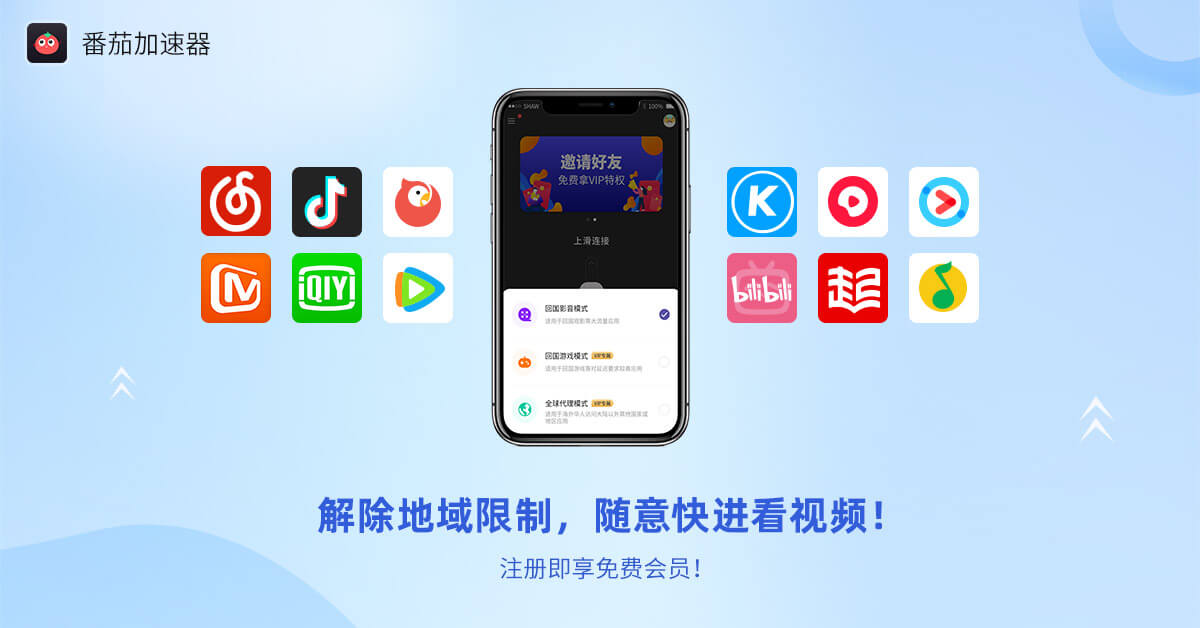
Going back to the original question: “QQ音乐在美国还能使用吗?” Yes, it can—if you use a reliable accelerator like Tomato. Whether you’re a留学生 in New York, a海外工作者 in London, or a海外华人 in Sydney, Tomato Accelerator lets you unlock your favorite Chinese music platforms with ease. It has global nodes, supports multiple devices, offers stable unlimited traffic, keeps your data safe, and has great after-sales support. I’ve been using it for over a year now, and I haven’t had any issues. If you’re struggling with overseas music access, give it a try—you won’t regret it. After all, music is a piece of home, and no one should have to miss out on that.